AI Foundation Diagnostic
Find what's holding your AI work back.
I review the evidence with the people closest to the work, identify the issue that needs attention first, and give you a 90-day plan of real actions, sized to the time your team actually has.
The facts
- Fixed fee
- agreed in writing before kickoff
- 3 weeks
- kickoff to handoff
- 4 interviews
- 45 minutes each
- 10 items
- evidence reviewed, agreed up front
One business unit, one sponsor, up to three related active AI use cases. You receive a five-area findings brief, a named primary blocker, a 90-day action plan, and a 60-minute handoff.


Use this when
- Your marketing team has an active AI effort and nobody agrees on what's blocking progress.
- Several related AI use cases are competing for the same attention and budget.
- A pilot stalled, and the explanations you're hearing don't match the evidence.
- Leadership expects more from AI than your data can support right now, and you need a plan you can defend.
- You can’t tell whether your AI work is paying off, because analytics, the CRM, and the reports disagree.
- You need a plan your team can own, not a generic AI roadmap.

You leave with
A five-area findings brief, a named primary blocker with the evidence behind it, a sequenced 90-day plan, and a 60-minute handoff your team can act on without me.
Sample findings brief
What you're holding at the end.
The brief reports each of the five areas on its own, then names the one issue that needs attention first. The overall picture won't hide the issue that needs attention first.
Primary blocker
Campaign performance lives in three exports with no shared customer key. Every AI summary starts by reconciling them by hand.
Evidence reviewed
- Weekly reporting deck, last 6 issues
- Export schemas from 3 platforms
- 4 interviews, 45 minutes each
- Pilot prompt library and outputs
First 90 days
- Weeks 1–3: agree one customer identifier with sales
- Weeks 4–8: one joined weekly table, about two hours a week for the head of marketing
- Weeks 9–12: rerun the summary pilot on that table; show the CEO the before and after

Fit and scope
Who this is for.
For marketing teams with active AI efforts and limited specialist support.
Most of my clients lead marketing at growing companies of roughly 20 to 200 people: big enough to have real systems, small enough that nobody’s full-time job is AI. Some of them run a marketing team; some of them are the marketing team. I also work with the marketing ops and analytics people who own the data underneath.
A good fit
- An AI effort is running, or has stalled, and people disagree about why.
- One sponsor and four people to interview. On a small team, that can be you, your CEO, and the people on either side of the workflow.
- Up to three related AI use cases in play.
- You can share the evidence: decks, exports, prompts, process docs.
Out of scope
- Company-wide platform or governance transformations.
- Broader stakeholder sets beyond the four interviews.
- Technical testing of systems or vendors. Scoped separately if needed.
- Building anything. The Diagnostic ends at the plan.
What I look at
Five areas, reported separately.
The percentages show where I put my assessment emphasis. They aren't proven causal weights.
| Area | Emphasis | The question it answers |
|---|---|---|
| Purpose | 20% | Is there a specific business problem this AI work is meant to solve, and does everyone name the same one? |
| Foundation | 25% | Can the data, systems, and access the workflow needs actually be provided, reliably and by a named owner? |
| Trust | 20% | Is there a review step people believe in, and does anyone check outputs before they're used? |
| Adoption | 20% | Do the people doing the work use the tool the way it was intended, and would they notice if it stopped? |
| Human Amplification | 15% | Does the work make people's judgment count for more, or does it route around them? |
Purpose
Emphasis20%The question it answersIs there a specific business problem this AI work is meant to solve, and does everyone name the same one?Foundation
Emphasis25%The question it answersCan the data, systems, and access the workflow needs actually be provided, reliably and by a named owner?Trust
Emphasis20%The question it answersIs there a review step people believe in, and does anyone check outputs before they're used?Adoption
Emphasis20%The question it answersDo the people doing the work use the tool the way it was intended, and would they notice if it stopped?Human Amplification
Emphasis15%The question it answersDoes the work make people's judgment count for more, or does it route around them?
Method
Evidence first, then interviews.
Opinions about an AI effort are easy to collect. The Diagnostic starts with what the work leaves behind, then asks the people closest to it to explain what the evidence shows.
1Agree on the evidence
Up to ten items we choose together at kickoff: reporting, exports, prompts, process documents, pilot outputs.
2Read it against the five areas
Each item is checked for what it shows and what it can't show. Gaps become interview questions.
3Interview the people closest to it
Four 45-minute conversations. Every finding in the brief traces to an evidence item, an interview, or both.
Outputs
Four things you keep.
Five-area findings brief
Each area reported on its own, with the evidence behind every finding.
Named primary blocker
The one issue that needs attention first, why it comes before the others, and what it costs you today in terms leadership already tracks: reports that disagree, leads that go nowhere, AI features paid for and switched off.
90-day action plan
Real actions in order, each with an owner and the time it takes. The first steps are wins you can show within weeks; the later ones set up what comes after. Sized to what your team can actually do, whether that’s ten people or one.
60-minute handoff
A working session to walk the brief, agree who picks up week one, and prepare how you’ll take it to leadership. Your CEO is welcome to join.
Send this to your CEO
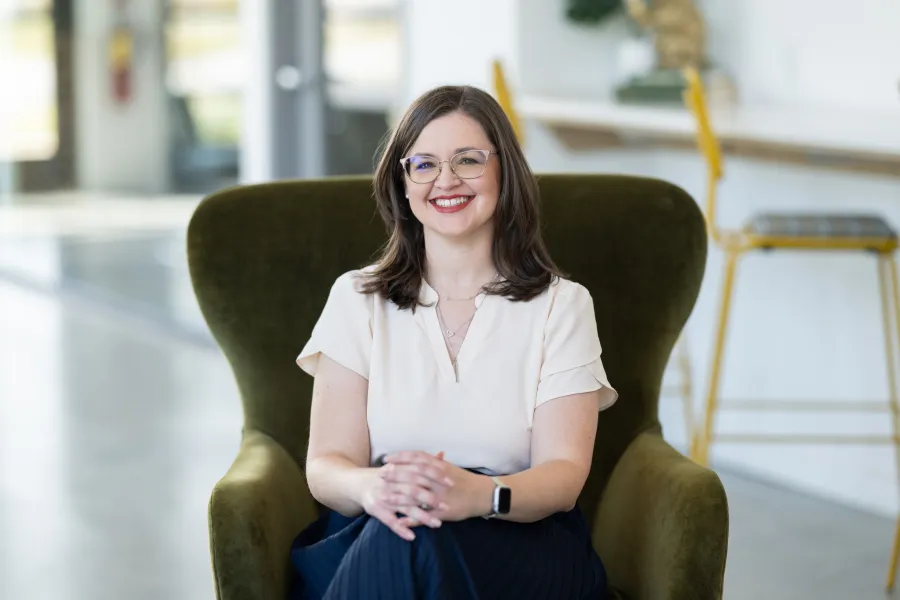
If someone else signs off, here is a paragraph you can forward as it is.
Before we spend more on AI, I’d like an outside read on what’s actually holding our work back. Allison Marx runs a three-week AI Foundation Diagnostic: she reviews up to ten pieces of evidence we already have, interviews four of us, names the one issue to fix first, and gives us a 90-day plan of real actions written so it can go straight to leadership. The fee is fixed and agreed in writing before it starts. It needs about five hours of the sponsor’s time, plus 45 minutes from each person interviewed.
Three weeks
Week by week, and what it asks of you.
Evidence preparation and interview scheduling are the client's part. The timeline holds when those land in week one.
| Week | What I do | What you do |
|---|---|---|
| One | Kickoff with the sponsor. Agree the use cases and the ten evidence items. Begin the evidence read. | Share the evidence. Name four interviewees and get them on the calendar. About 3 hours of your time. |
| Two | Four 45-minute interviews. Finish the evidence read. Draft area findings and test the candidate primary blocker against them. | Interviewees show up for 45 minutes each. Sponsor answers follow-up questions by email. |
| Three | Write the brief and the 90-day plan. Send the draft for factual correction. Run the 60-minute handoff. | Review the draft for factual errors, one consolidated round. Attend the handoff. About 2 hours. |
One
What I doKickoff with the sponsor. Agree the use cases and the ten evidence items. Begin the evidence read.What you doShare the evidence. Name four interviewees and get them on the calendar. About 3 hours of your time.Two
What I doFour 45-minute interviews. Finish the evidence read. Draft area findings and test the candidate primary blocker against them.What you doInterviewees show up for 45 minutes each. Sponsor answers follow-up questions by email.Three
What I doWrite the brief and the 90-day plan. Send the draft for factual correction. Run the 60-minute handoff.What you doReview the draft for factual errors, one consolidated round. Attend the handoff. About 2 hours.

From the field
One Diagnostic, anonymized.
What a client brought, what the evidence showed, and what happened in the 90 days after. Reported as observed, not as a promise.

Starting problem
Administrative work was eating up too much time for 1/3 of the company's employees.
Allison's role
I ran intake, organization, and prioritization of all ideas. Then, I suggested a tech stack, high-level solution and ownership for all so we could determine feasibility.
Evidence reviewed
Key stakeholders weighed in on the tasks that were the most routine and easiest to automate. We made a spreadsheet to classify and prioritize all ideas so we would know what to start first.
Recommendation and 90-day result
We automated meeting notes and task automation from Fathom to ClickUp first. The working model saved hours per week of time across all teams, and added valuable client context to ClickUp for use by ClickUp's built-in AI tool.
In their words
“Allison brings so much historical knowledge, insights, industry information, and key dependencies, all while being concise and helping to get the teams bought into the future vision. She was highly engaged in our meetings and built client confidence in their decision-making.”
Excerpts from 2025-2026 company award submissions

Before you book
Common questions.
Anything not covered here, bring to the call.
What access to our evidence do you need?
Read access to the ten items we agree at kickoff, shared however your team already shares files. I don't need system logins. Anything sensitive can be redacted before it reaches me.
What if some evidence doesn't exist?
That's a finding. Missing evidence usually points at the blocker faster than a full folder does. The brief records what couldn't be checked and why it matters.
What if it becomes clear early that a different service fits?
I'll say so, in week one if I can. If a Design Sprint or a call would resolve your decision, we stop and switch. You won't be asked to repeat work without a reason.
What if I’m the whole marketing team?
Then you’re the sponsor and the first interview. The other three are the people your work depends on or answers to: often your CEO, someone in sales or customer success, and an agency or contractor. The plan is sized to the hours you actually have.
Can you help me explain this to our CEO?
Yes. The brief is written so it can go to leadership as it is: plain language, every finding traced to evidence. The handoff covers how to present it, and your CEO is welcome to join it.
Does the plan promise results?
It promises steps your team can actually take, each with what it should change and how you’ll know. I won’t put an ROI figure on work that depends on data nobody has checked yet.
When would you tell me not to hire you yet?
When there’s no AI effort or decision on the table yet, when nobody can share the evidence, or when a 90-minute Working Session would answer the question. I’ll say so on the free call, and point you to the smaller step.
What does the fee depend on?
How many use cases are in play, how much evidence there is to read, and who needs to be interviewed. It’s set after the free call, fixed in the proposal, and agreed in writing before kickoff. It only changes if the scope does, in writing.
Do we own the brief and the plan?
Yes. The findings brief, the 90-day plan, and the interview notes are yours to share internally or with another vendor.
Bring the AI effort that's stalled. We'll work out whether this is the right first step.
Free introductory conversation. No preparation required.